
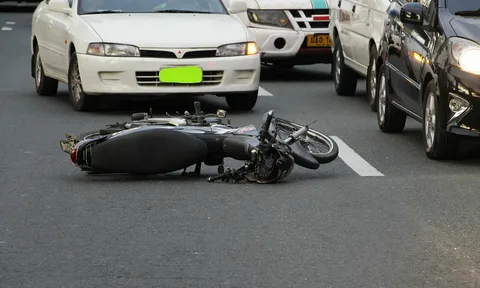
Motorcycle accidents in Atlanta are among the most serious crashes that occur on Georgia roads. The combination of high-speed interstates, aggressive city traffic, and a persistent bias among other drivers who simply do not look for motorcycles creates conditions where riders face disproportionate risk every time they ride. When a negligent driver causes a motorcycle crash, the injuries are almost always severe — and the claims process is more challenging than most accident victims realize.
If you were injured in a motorcycle crash anywhere in the Atlanta metropolitan area, working with an experienced accident lawyer who understands Georgia’s specific motorcycle laws, the insurance industry’s approach to bike accident claims, and the local court system gives you the strongest possible foundation for recovery. This guide covers everything Atlanta motorcycle accident victims need to know.
Why Motorcycle Accident Cases Require Specialized Legal Knowledge
An atlanta motorcycle accident lawyer handles cases that involve challenges beyond standard car accident claims. The differences are significant and directly affect how cases are built and what victims recover.
Bias against motorcyclists is real and documented. Insurance adjusters, and sometimes juries, carry preconceived notions about motorcycle riders — that they are reckless, that they speed, that accidents are their own fault. An experienced motorcycle accident lawyer atlanta knows how to counter this bias with evidence that tells the accurate story of who caused the crash and why.
Injuries are categorically more severe. A motorcycle rider has no structural protection — no steel frame, no airbags, no crumple zones. When a car driver’s negligence causes a collision, the motorcyclist absorbs the full force. This means medical expenses are typically higher, recovery is longer, and the long-term impact on quality of life is more significant than in most car accident cases.
Liability is more frequently disputed. Because of anti-motorcyclist bias, at-fault drivers and their insurers frequently attempt to blame the rider — claiming speeding, lane splitting, or reckless behavior that did not actually occur. Building a strong case with objective evidence is essential.
Georgia’s helmet law and comparative fault rules interact in specific ways that require legal knowledge to navigate effectively. Riding without a helmet does not automatically bar a claim, but it creates complications that must be managed carefully.
The Scale of Motorcycle Accidents in Georgia
The numbers are sobering. According to the National Highway Traffic Safety Administration, motorcyclists are significantly over-represented in traffic fatalities. While motorcycles make up approximately two percent of all registered vehicles in Georgia, they account for nearly ten percent of all traffic fatalities in the state.
In a recent data year, over 150 Georgians were killed in motorcycle accidents. Tens of thousands more were injured — many with injuries that require surgery, extended hospitalization, and lengthy rehabilitation. The Atlanta metropolitan area, with its high-speed interstates and dense urban traffic, accounts for a significant share of the state’s total motorcycle crash toll.
An atlanta motorcycle accident attorney who handles these cases regularly knows exactly what evidence is needed, how Georgia juries evaluate motorcycle claims, and how to build a case that accurately represents the rider’s actual conduct and the other driver’s negligence.
Atlanta’s Most Dangerous Roads for Motorcycle Accidents
Certain roads in and around Atlanta create conditions where motorcycle crashes are particularly likely.
Interstate 285 (the Perimeter) encircles Atlanta and carries some of the heaviest traffic volume in the state. Lane changes at high speed, aggressive merging, and frequent congestion create dangerous conditions for motorcyclists. The I-285/I-85 interchange — known as Spaghetti Junction — is among the most complex and hazardous freeway environments in the region.
Interstate 75 and Interstate 85 running through downtown Atlanta are consistent accident corridors. Heavy truck traffic, sudden congestion, and the complexity of the Downtown Connector where I-75 and I-85 merge create conditions where motorcycle accidents occur regularly.
Peachtree Street and its various extensions from downtown through Buckhead, Chamblee, and into Dunwoody carry heavy pedestrian and vehicle traffic with frequent intersection conflicts. Left-turn accidents — one of the leading causes of motorcycle fatalities nationally — are common on this corridor.
Highway 78 (Stone Mountain Freeway) serves the eastern Atlanta suburbs and sees significant motorcycle traffic on weekends. The combination of residential and commercial traffic with higher speeds creates recurring accident hazards.
The connector roads around Hartsfield-Jackson Airport see heavy commercial and rental car traffic from unfamiliar drivers who frequently fail to check blind spots before lane changes — a pattern that puts motorcyclists at serious risk.
State Route 400 (Georgia 400) runs through Buckhead and Sandy Springs and carries high-speed traffic with complex interchange conditions near the I-285 intersection.
Georgia Motorcycle Laws — What Every Rider and Victim Needs to Know
Understanding Georgia’s motorcycle-specific laws matters both for riders and for victims of motorcycle accidents, because these laws affect how claims are evaluated and how compensation is calculated.
Georgia’s Helmet Law
Georgia requires all motorcycle operators and passengers to wear protective headgear that conforms to state standards under Georgia Code Title 40, Chapter 6, Article 13. Eye protection is also required unless the motorcycle is equipped with a windshield. Georgia’s helmet law has been in effect for more than 50 years and is one of the factors that affects compensation calculations.
What not wearing a helmet means for your claim: If you were not wearing a helmet and suffered a head injury, the insurance company and potentially a jury will evaluate whether the lack of helmet contributed to the severity of that specific injury. Your damages for that injury may be reduced proportionally. However, injuries not related to head protection — broken bones, road rash, internal injuries — are generally not affected by whether you wore a helmet.
If the lack of helmet is found to be 50% or more responsible for causing a specific injury, Georgia’s comparative fault rules would bar recovery for that injury. This makes proper legal representation critical in cases where helmet use is in question.
Georgia Motorcycle-Specific Traffic Laws
Under Georgia Code Title 40, motorcyclists have all the rights and duties of any other vehicle operator, with specific additional provisions:
Lane splitting is illegal in Georgia. Motorcycles may not drive between lanes of traffic or adjacent rows of vehicles. If an insurance company claims you were lane splitting at the time of an accident, this could significantly affect your claim.
Lane sharing — two motorcycles riding abreast in a single lane — is permitted, but more than two motorcycles may not ride abreast.
Lane position rights — motorcyclists are entitled to the full use of their lane, and it is illegal for another driver to crowd or squeeze a motorcyclist out of their lane.
Headlights on at all times are required for Georgia motorcyclists.
An atlanta motorcycle accident attorney uses these laws both to establish the rider’s compliance and to identify violations by the at-fault driver that contributed to the crash.
Georgia’s Comparative Fault System
Georgia follows a modified comparative fault system — specifically a 50% bar rule. This means:
- If you are found 49% or less at fault, you can recover compensation, but it is reduced by your percentage of fault.
- If you are found 50% or more at fault, you cannot recover any compensation.
Insurance companies use this rule aggressively in motorcycle cases — assigning blame to the rider to reduce or eliminate payouts. An atlanta motorcycle accident lawyers team builds the strongest possible evidence foundation to accurately establish fault and counter unfair blame assignments.
Common Causes of Atlanta Motorcycle Accidents
A motorcycle accident lawyer atlanta investigates the specific cause of every crash because the cause determines who is liable and what evidence needs to be preserved.
Left-turn accidents are the single most common cause of serious motorcycle fatalities nationally and in Georgia. These occur when a vehicle turning left at an intersection, driveway, or median cut fails to see an oncoming motorcycle. The motorcycle is almost always in the right — traveling straight with the right of way — and the turning driver is at fault. Despite this, insurers frequently try to blame the rider.
Rear-end collisions occur when a following vehicle fails to maintain adequate stopping distance and strikes a motorcycle from behind. These crashes are almost always the following driver’s fault, but they produce catastrophic injuries to the rider.
Lane change crashes happen when a driver changes lanes without checking blind spots — a motorcycle’s smaller profile makes it easier to miss, and careless lane changes are a leading cause of serious bike crashes on Atlanta’s interstates.
Distracted driving by car and truck drivers — texting, phone calls, navigation systems — frequently leads to crashes with motorcycles because a distracted driver is even less likely to see a smaller vehicle.
Drunk driving accidents involving motorcycles are particularly deadly. An atlanta ga motorcycle accident lawyer pursuing a DUI-related bike crash may be entitled to punitive damages in addition to standard compensatory damages.
Road hazards including potholes, debris, uneven pavement, and railroad crossings that are easily traversed by cars can be catastrophic for motorcyclists. When a government entity responsible for road maintenance failed to address known hazards, government liability claims may apply.
Dooring accidents in urban Atlanta — where a car door is opened directly into a motorcyclist’s path in traffic — cause serious crashes, particularly on city streets with parallel parking.
What Evidence Matters in an Atlanta Motorcycle Accident Case
Building a strong motorcycle accident case requires gathering specific evidence quickly — before it disappears.
Traffic camera and dashcam footage from the crash location must be requested immediately. Many intersections and highways in Atlanta have camera coverage, and this footage is often overwritten within days.
The police report from the Atlanta Police Department or Georgia State Patrol documents the officer’s assessment of fault and any citations issued. Errors in police reports can be challenged with additional evidence.
Witness statements from other drivers, passengers, and bystanders who saw what happened before and during the crash.
Vehicle damage analysis — the location and pattern of damage on both the motorcycle and the other vehicle tells a story about the angle and sequence of the crash that objective evidence supports.
Medical records documenting all injuries from the day of the crash through the full course of treatment establish the connection between the crash and the injuries and their full impact.
Expert accident reconstruction in disputed liability cases uses physical evidence to scientifically establish exactly how the crash occurred.
Common Injuries in Atlanta Motorcycle Accidents
Because motorcyclists have no structural protection, injuries in these crashes are among the most severe seen in personal injury law.
Road rash — abrasion injuries from contact with the road surface — ranges from minor to life-altering. Severe road rash can require skin grafting and leaves permanent scarring.
Traumatic brain injuries occur even in helmeted riders in high-impact crashes. TBI can cause permanent cognitive, behavioral, and physical impairments.
Spinal cord injuries including fractures, herniated discs, and in severe cases complete or partial paralysis are frequently seen in motorcycle crash cases.
Broken bones — particularly arms, legs, collarbone, and pelvis — are extremely common in motorcycle accidents where the rider is thrown from the bike.
Internal injuries from blunt force trauma require emergency evaluation. Internal bleeding is life-threatening if not diagnosed promptly.
Amputations and crush injuries are seen in the most severe motorcycle crashes, particularly underride situations where a motorcycle slides under a larger vehicle.
Wrongful death — motorcycle crashes in Georgia produce a disproportionate share of fatalities. Surviving family members may pursue wrongful death claims.
What Compensation Is Available After an Atlanta Motorcycle Accident
Economic damages cover documented financial losses: emergency medical treatment and hospitalization, ongoing care including surgery, physical therapy, and specialist visits, prescription medications and medical equipment, lost wages and loss of future earning capacity, motorcycle repair or replacement, and other accident-related out-of-pocket expenses.
Non-economic damages cover the human impact: pain and suffering, emotional distress and PTSD, loss of enjoyment of life, disfigurement from road rash or other scarring, and loss of consortium.
Punitive damages may be available when the at-fault driver’s conduct was especially reckless — drunk driving, extreme speeding, road rage — under Georgia law.
Atlanta Motorcycle Accident Settlement Ranges
| Injury Severity | Typical Range |
| Road rash and minor fractures | $25,000 to $100,000 |
| Multiple fractures or surgery | $100,000 to $500,000 |
| Serious permanent injuries | $500,000 to $2,000,000 |
| TBI, spinal, or paralysis | $2,000,000+ |
| Wrongful death | $1,000,000+ |
Victims represented by an atlanta motorcycle accident attorney consistently recover more than those who negotiate directly with insurance companies, particularly in cases where anti-motorcyclist bias must be actively countered.
What to Do After a Motorcycle Accident in Atlanta
Call 911 and stay at the scene. A police report from APD or Georgia State Patrol is essential documentation.
Get medical attention the same day. Even if you feel okay after a crash, see a doctor immediately. Adrenaline masks serious injuries, and a same-day medical record connects your injuries to the crash.
Photograph everything. The crash scene, both vehicles, road conditions, your gear, and your visible injuries before anything is moved or cleaned.
Do not remove your helmet. If damaged, your helmet is evidence of the impact force. Photograph it and preserve it.
Collect all information. The other driver’s name, license, insurance, and vehicle registration. Witness names and contacts.
Do not give a recorded statement to the other driver’s insurance company. They are not calling to help you — they are gathering information to minimize the claim.
Contact an atlanta motorcycle accident lawyer immediately. Evidence disappears quickly, and the insurance company’s team begins working from the moment the crash is reported.
Frequently Asked Questions
Can I recover compensation if I was not wearing a helmet?
In most cases, yes — for injuries not related to helmet protection. For head injuries specifically, the compensation may be reduced if not wearing a helmet is found to have contributed to the severity of the injury. If the lack of helmet is found 50% or more responsible for a specific injury, Georgia's comparative fault rule bars recovery for that injury.
What if the other driver claims I was speeding?
Unsupported claims of speeding are common from at-fault drivers in motorcycle cases. A motorcycle crash attorney atlanta counters these claims with objective evidence — traffic camera footage, skid mark analysis, accident reconstruction, witness statements, and the physical evidence of the crash itself.
Is lane splitting legal in Georgia?
No. Lane splitting — riding between lanes of traffic — is illegal in Georgia. If an insurance company claims you were lane splitting, this could affect your claim. An atlanta motorcycle accident injury lawyer evaluates whether lane splitting was actually occurring and builds evidence to address the claim if disputed.
How long do I have to file a motorcycle accident lawsuit in Georgia?
Georgia gives accident victims two years from the date of the accident to file a personal injury lawsuit. Missing this deadline permanently eliminates the right to sue, regardless of how strong the case is. Contact an atlanta motorcycle accidents lawyer as soon as possible.
What if a drunk driver hit me on my motorcycle?
A motorcycle wreck lawyer atlanta pursues additional claims when the at-fault driver was impaired — including potential punitive damages under Georgia law. The criminal DUI case and the civil personal injury case proceed separately, and a criminal acquittal does not prevent civil recovery.
How does insurance company bias against motorcyclists affect my claim?
Insurers frequently approach motorcycle accident claims with skepticism, assigning blame to the rider through assumptions about speed and recklessness. An experienced motorcycle accident law firm atlanta documents the rider's actual conduct with objective evidence and presents a clear case for the other driver's negligence — countering these assumptions at every stage of negotiation and litigation.
What if the road defect caused my crash?
Road hazards that cause motorcycle crashes may create liability for the City of Atlanta, the Georgia Department of Transportation, or another government entity. These claims require filing a formal ante litem notice within six months of the accident. An atlanta motorcycle accident law firm takes immediate action to identify government entity liability and file required notices.
Do I need a motorcycle accident specialist or can any personal injury lawyer help?
Motorcycle accident cases require specific knowledge — Georgia's helmet law and how it interacts with comparative fault, the specific bias issues that affect these cases, the distinct injury patterns of bike crashes, and the evidence strategies needed to counter unfair blame assignments. A best motorcycle accident lawyer atlanta who handles these cases regularly brings knowledge that general personal injury attorneys may not have.
How much does an Atlanta motorcycle accident lawyer cost?
Most atlanta motorcycle accident lawyers and motorcycle accident law firm atlanta ga practices handle these cases on contingency — no upfront fees and no payment unless the case results in compensation. The fee is typically 33% to 40% of the recovery. There is no cost to obtain a free initial consultation.
Checklist for Atlanta Motorcycle Accident Victims
- Call 911 — get an official police report filed
- Get medical attention the same day — create an unbroken injury record
- Photograph everything — the scene, both vehicles, your gear, your injuries
- Preserve your helmet — it is evidence of impact force
- Collect all driver, witness, and insurance information
- Do not remove or alter any evidence from your motorcycle before it is documented
- Do not give recorded statements to any insurance company
- Contact an atlanta motorcycle accident lawyer immediately
Conclusion
Atlanta motorcycle accidents produce some of the most severe injuries in Georgia personal injury law — and some of the most challenging claims, given the persistent bias that motorcyclists face from insurance companies and sometimes from juries. Georgia’s helmet law, its 50% comparative fault bar, and the specific evidence strategies needed to counter anti-motorcyclist bias all require legal knowledge that comes from handling these cases regularly.
Whether you are looking for the best motorcycle accident lawyer atlanta has to offer after a crash on I-285, a motorcycle crash lawyer atlanta after a left-turn collision, an atlanta motorcycle accident injury lawyer for a road rash or fracture case, or a motorcycle accident law firm atlanta to handle a wrongful death claim — experienced motorcycle accident attorneys atlanta work on contingency and offer free consultations.
An atlanta motorcycle accident lawyer who regularly handles Georgia bike accident cases gives you the best chance at the full compensation you deserve.
Nothing in this article constitutes legal advice. For guidance specific to your situation, please consult a licensed personal injury attorney in Georgia.