Every single day in the United States, thousands of people wake up and their lives change in an instant. A car slides through a red light. A worker falls from scaffolding. A pedestrian gets struck at a crosswalk. A bus crash leaves passengers injured. A drunk driver swerves into the wrong lane. And when that moment passes — the questions begin. AccidentsLawyer.us is your free, trusted legal education resource. We explain it clearly, honestly, and in plain English.

All content on AccidentsLawyer.us is reviewed by licensed attorneys and written in compliance with Google's E-E-A-T guidelines — Experience, Expertise, Authoritativeness & Trustworthiness.

An accidents lawyer is a legal professional who represents people who get hurt because of someone else's careless or reckless behavior. This area of the law is called personal injury law in the United States. These attorneys work exclusively on the victim's side. Their job is to help injured people understand their rights and, when needed, pursue financial compensation for their losses. You do not need a law degree to understand how accident law works in America. You just need someone to explain it clearly, honestly, and in plain English.
You may also hear them called personal injury attorneys, injury lawyers, or accident attorneys. All of these terms refer to the same type of legal professional. The entire system of personal injury law in the US is built on one central legal concept called negligence. When someone acts carelessly and that carelessness causes harm to another person, the injured person may have the legal right to seek compensation — covering medical bills, lost wages, physical pain, emotional suffering, and much more.
An accidents lawyer handles civil cases, not criminal ones. Criminal cases are brought by the government against a person who broke the law. Civil personal injury cases are brought by one person against another person, a company, or an insurance company. The goal is not jail time — the goal is financial compensation for the harm caused. According to 2025 data, there are approximately 164,559 personal injury lawyers practicing across the United States in more than 60,000 law firms.
Most accidents lawyers work on a contingency fee basis — you pay nothing upfront. The lawyer takes 33 to 40 percent of the final settlement only if you win. No recovery, no fee.
Personal injury cases are civil matters — not criminal. Even in a drunk driving accident, your compensation claim runs separately from any criminal charges the driver faces.
Victims with a lawyer average $77,600 in settlements. Those without average only $17,600. That is more than 4 times more — simply by having professional guidance.
Your full rights as a victim, how the claims process works step by step, what affects your settlement value, common mistakes to avoid, and how accident laws differ across all 50 US states.
According to the National Highway Traffic Safety Administration, an estimated 39,345 people died in traffic crashes in 2024. In 2023 alone, motor vehicle crashes caused 5.1 million medically treated injuries across the country. Motor vehicle crashes cost Americans approximately $417 billion every year when accounting for medical costs, lost productivity, legal expenses, and other damages. Nearly 400,000 personal injury claims are filed every single year across the United States. The personal injury law industry generated $61.7 billion in revenue in 2025, and it continues to grow.
| Accident Type | Annual Cases | Avg Settlement | Fatalities/Year | Risk Level |
|---|---|---|---|---|
| Car Accidents | 6.1 Million | $23,900 | 38,824 | High |
| Truck Accidents | 500,000 | $76,500 | 5,149 | High |
| Motorcycle Accidents | 180,000 | $54,000 | 6,084 | High |
| Pedestrian Accidents | 130,000 | $38,000 | 7,522 | High |
| Workplace / Construction | 2.8 Million | $41,000 | 5,486 | Medium |
| Bus Accidents | 67,000 | $18,500 | 233 | Medium |
| Drunk Driving | 300,000+ | $44,000 | 13,524 | High |
| Uber / Lyft Accidents | 97,000 | $22,000 | — | Growing |
In-depth legal guides for every major accident type across the United States.

18-wheeler and commercial truck accidents involve complex liability. Multiple parties — driver, trucking company, or manufacturer — could all share responsibility. Learn how to maximize your claim.
Read Full Guide →
The most common accident type in the US with 6.1 million annual cases. Understand fault, insurance claims, and your full right to compensation after a collision.
Read Full Guide →
Pedestrians have no physical protection against a moving vehicle. If struck by a car or truck, you have strong grounds to pursue significant compensation for your injuries.
Read Full Guide →
DUI accident victims have particularly strong legal rights — including the ability to seek punitive damages on top of standard compensation. These cases often result in the highest settlements.
Read Full Guide →
Motorcyclists are among the most vulnerable road users. Without the protection of an enclosed vehicle, injuries are often severe and life-altering. Know your full legal rights as a rider.
Read Full Guide →
Bus accidents involve government agencies or large private companies with strict filing deadlines — sometimes as little as 30 to 90 days. Missing this deadline can permanently end your right to compensation.
Read Full Guide →Every accident victim in the United States has fundamental legal rights — regardless of the state you live in. One of the most important things to understand after any accident is that you have rights. These rights are protected by US law, and knowing them can make a significant difference in what happens next.
If someone else's carelessness caused your accident and your injuries, you have the legal right to pursue financial compensation called damages — covering medical bills, lost wages, pain and suffering, and property damage caused by another's negligence.
You have the right to hire an attorney at any stage of the process. Insurance companies have full legal teams working against you — so should you. Most accident lawyers work on contingency, meaning absolutely no upfront cost to you.
You are never obligated to accept the first offer from an insurance company. Quick offers are almost always far below what you are legally entitled to receive. Once you sign and accept a settlement, you generally cannot reopen the case for more money later.
You have the right to seek immediate medical care and have those expenses covered as part of your personal injury claim. Some injuries like whiplash, internal bleeding, and traumatic brain injuries do not always show immediate symptoms — prompt treatment creates an official record connecting your injuries to the accident.
After an accident, you are not required to give a recorded statement to the other party's insurance company. Insurance adjusters often contact victims within hours of an accident. You have every right to take time, gather your thoughts, and seek guidance before making any formal statements.
If a fair settlement cannot be reached, you have the right to take your case to court and let a judge or jury decide the fair amount of compensation. Only around 4 to 5 percent of personal injury cases actually go to trial — but having this right strengthens your negotiating position.
Most accident claims follow a similar path. Understanding each step gives you a clear map of what to expect at every stage — and helps you avoid the critical mistakes that cost victims thousands of dollars.
If you are physically able, move to a safe location and call 911 if anyone is injured. Exchange information with all involved parties, photograph the scene and any visible injuries, collect witness contact information, and get a copy of the official police or incident report. This is the foundation of your entire claim.
Some injuries like whiplash, internal bleeding, and traumatic brain injuries do not always show immediate symptoms. Prompt treatment creates an official medical record that documents your injuries and connects them directly to the accident. Delaying medical care is one of the most damaging mistakes a victim can make.
After medical care, notify your own insurance company about what happened while sticking to basic facts only. Do not give recorded statements to the opposing party's insurer — insurance adjusters are trained employees whose job includes protecting the company's bottom line, not helping you recover what you deserve.
All relevant evidence is collected — police reports, medical records and bills, photographs and video footage, witness statements, and documentation of income losses. This evidence is used to calculate the full value of your claim before any demand is made to the insurance company.
A formal demand letter is sent to the at-fault party's insurance company laying out the facts, the evidence, the full extent of losses, and the amount being sought. The insurer responds — typically with a lower offer — and the negotiation phase begins. Research shows that people who negotiated past the first offer received an average of $30,700 more.
If a fair settlement is reached, both sides sign an agreement and the case closes. If negotiations fail, a formal lawsuit is filed. Even after filing, most cases still settle before reaching a courtroom. Only 4 to 5 percent of personal injury cases actually go to trial — but filing a lawsuit signals to insurers you are serious.

When you have just been in an accident, you need answers fast. Not legal jargon. Not sales pitches. Just clear, honest information from people who actually know accident law.
We translate complex accident law into clear, simple language that anyone can understand. No confusing legal terms, no unnecessary complexity — just the answers you actually need right now.
Every guide on this site is written and reviewed by licensed personal injury attorneys with real courtroom experience. You are not reading AI-generated content or generic legal summaries.
Every article, guide, and resource on AccidentsLawyer.us is 100% free. No subscriptions. No paywalls. No hidden fees. We believe that access to legal information should never depend on your income level.
Accident law varies dramatically from state to state. Our content covers all 50 US states — including specific statutes of limitations, comparative negligence rules, no-fault systems, and filing deadlines for every state.
We do not receive money from law firms. We do not refer clients to attorneys. We have no financial stake in what you decide to do. Our information is completely unbiased because we have nothing to sell you.
Laws change. Court decisions change. Insurance regulations change. Our editorial team continuously reviews and updates all content to reflect the most current legal standards and best practices across the United States.
Insurance companies are businesses. Their financial interest is paying out as little as possible. Adjusters are trained to protect the company's bottom line — not to help you recover what you deserve. Here is what they actually do.
Deliberately stalling to frustrate you into accepting a lower settlement or missing filing deadlines that void your claim entirely.
Asking for a recorded statement early on to capture inconsistencies that can be used to devalue or deny your claim.
Presenting an early settlement offer that sounds reasonable but is far below the actual value of your damages and future medical expenses.
Hiring investigators or monitoring your social media to find evidence contradicting your injury claims or lifestyle impact statements.
No single number applies to every case. Settlement values depend on many factors working together — and understanding all of them is essential before agreeing to anything.
All current and future medical costs including surgeries, therapy, and long-term care directly impact settlement value.
Wages lost during recovery plus reduced future earning capacity are calculated and added to your compensation claim.
Non-economic damages for physical pain, emotional distress, and reduced quality of life — often the largest component.
Comparative negligence rules vary by state. Your settlement may be reduced if you are found partially at fault for the accident.
The at-fault party's insurance coverage limits can cap your recovery unless they have personal assets or underinsured motorist coverage.
Strong documentation — medical records, police reports, witness statements, and expert testimony — significantly increases settlement value.
Even people with strong cases sometimes make decisions that reduce the value of their claims or completely eliminate their ability to recover compensation. These are the most critical mistakes victims make without realizing it — and how to avoid them.
Even if you feel okay, waiting to see a doctor gives insurers a powerful argument that your injuries weren't caused by the accident or weren't serious enough.
First offers are almost never the best offers. Once you sign a release, the case is permanently closed — no going back. Data shows 73% of unrepresented victims accept below fair value.
Insurance adjusters are skilled at asking questions that seem harmless but are specifically designed to get you to say something that limits your claim.
Photographs showing physical activity, casual comments about how you feel, or posts inconsistent with your injuries can and will be used against you by insurance investigators.
Every state has a filing deadline — typically 2–3 years, sometimes as little as 30–90 days for government entities. Miss it and your right to file is permanently gone.
Medical bills, prescription receipts, wage statements, daily notes about how injuries affect your life — every piece of documentation strengthens every stage of your claim.
Accident law in the United States is not uniform. Each state has its own rules, deadlines, and systems. Some states operate under pure comparative negligence, others under modified rules, and some are no-fault states entirely. Understanding your state's system can significantly affect your case.
| Negligence System | How It Works | States That Use It |
|---|---|---|
| Pure Contributory Negligence | Even 1% fault can bar recovery completely | Alabama, Maryland, Virginia, NC, DC |
| Pure Comparative Negligence | Can recover even at 99% fault, reduced by your share | California, Florida, New York, others |
| Modified Comparative Negligence | Recovery allowed only if under 50 or 51% at fault | Most US states |
No-Fault States: Florida, Michigan, New York, New Jersey, Pennsylvania, Hawaii, Kansas, Kentucky, Massachusetts, Minnesota, North Dakota, and Utah — in these states your own insurance covers medical bills regardless of who caused the accident.
Accident law in the United States continues to evolve rapidly. Several important developments are changing how cases are handled and how victims pursue compensation right now.
As self-driving vehicles and electric vehicles become more common on US roads, they are creating legal questions that did not exist before. When an autonomous vehicle causes an accident, determining liability is far more complex — is it the driver, the vehicle manufacturer, or the software company? Courts and legislatures across the country are actively working to develop legal frameworks for these new situations.
Technology is transforming how accident cases are investigated and argued. Evidence now routinely includes dashcam footage, event data recorders inside vehicles, telematics data from insurance apps, and GPS records from smartphones. According to 2025 industry data, more than 50 percent of US personal injury law firms now use some form of AI tool for document review, research, and case management.
As rideshare services have expanded dramatically across the United States, accidents involving Uber and Lyft vehicles have become increasingly common. In 2024, Uber and Lyft together provided over 8 million trips per day across the US. California, Texas, and New York have introduced new minimum insurance requirements for rideshare drivers that significantly impact accident victim rights.
The FMCSA is implementing stricter electronic logging and driver fatigue regulations — creating stronger liability cases against trucking companies in accident claims. Distracted driving was responsible for more than 324,000 injuries in 2023 alone. These new standards are changing how truck accident cases are investigated and argued.
Everything you need to know about accident law, your rights, and the claims process — answered clearly and honestly.
Move to a safe location and call 911. Exchange information with all involved parties, photograph the scene and any visible injuries, and collect witness contact information. Seek medical attention right away even if you feel okay. Notify your own insurance company and save every receipt, report, and document related to the accident from day one.
This depends entirely on the state where the accident happened. Most states give between two and three years from the date of the accident. Cases involving government entities often require a formal notice of claim within just 30 to 90 days. Missing the deadline permanently closes the door on your claim — no matter how strong your case is.
A contingency fee means the lawyer gets paid only if you recover money through a settlement or court award. The fee is typically 33 to 40 percent of the final recovery. If there is no recovery, you owe absolutely nothing. This system exists so that everyone can access quality legal representation regardless of their financial situation.
A settlement is a voluntary agreement between the parties on a compensation amount reached outside of court. Going to trial means presenting the case before a judge or jury. About 95 percent of personal injury cases settle before trial. Settlements are generally faster, less expensive, and less stressful than full courtroom proceedings.
You may recover economic damages such as medical bills, lost wages, and future care costs. You may also recover non-economic damages for pain and suffering and emotional distress. In cases involving reckless behavior like drunk driving, punitive damages may also be available in many states.
Not every accident claim requires legal representation. Minor accidents with low damages and clear liability sometimes resolve smoothly. But in cases involving serious injuries, disputed fault, or significant financial losses, having professional guidance makes a measurable difference. People with legal representation recover an average of $77,600 — compared to $17,600 without.
Knowledge is one of the most powerful tools an accident victim can have. The difference between knowing your rights and not knowing them can directly and measurably change the outcome of a claim. People who do not understand how the process works are far more likely to accept a first offer that is well below fair value, miss important legal deadlines, say things that unintentionally limit their claim, or not even realize they have a valid claim at all.
That is the entire purpose of this website. AccidentsLawyer.us exists to provide clear, honest, and up-to-date educational information about accident law in the United States. We do not sell anything. We do not have a financial stake in what you decide to do. We simply believe that people deserve access to good information when they need it most. Whether you are dealing with a car accident, a pedestrian accident, a bus accident, a construction site injury, an Uber or Lyft accident, or a drunk driving incident — the information on this website is here to help you understand your situation more clearly.
Expert insights, legal updates, and guides written by Robert M. Collins.
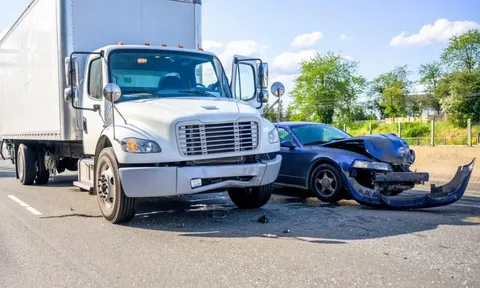
Every Denver truck accident case begins the same way — a catastrophic crash, a victim with serious injuries, and a...
Robert M. Collins

Most people injured in Denver motorcycle accidents ask the same three questions: How much is my case worth? What does...
Robert M. Collins

Delivery vehicles are on American roads in greater numbers than ever before. According to the U.S. Census Bureau, e-commerce sales...
Robert M. Collins