
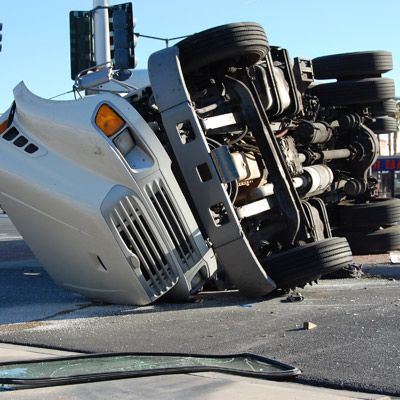
A fully loaded commercial truck can weigh up to 80,000 pounds. The average passenger car weighs around 4,000. When those two meet on a highway, the consequences are rarely minor.
Truck accidents are among the most devastating crashes on American roads. The injuries are often catastrophic, the legal process is significantly more complicated than a typical car accident case, and the opposition — trucking companies and their insurers — comes prepared from the moment a crash happens. Understanding how these cases work is important for anyone who has been involved in one.
This guide covers what a truck accident lawyer actually does, why these cases are different from other accident claims, who can be held liable, and what the process looks like from start to finish.
Before anything else: everything here is general information only, not legal advice. Truck accident laws vary by state and situation, and anyone who has been seriously injured should speak with a licensed attorney as soon as possible.
What Does a Truck Accident Lawyer Do?
The short answer is a lot more than most people expect.
When a serious truck crash happens, the trucking company does not wait around. Many large carriers send rapid response teams to the accident scene within hours. These are not people there to help victims. They are there to gather and control evidence that protects the company’s legal position. By the time an injured person is out of the hospital and thinking about their legal options, the other side may already have weeks of preparation behind them.
A truck accident lawyer counters this from day one. The first priority is evidence preservation. Commercial trucks are equipped with electronic control modules, sometimes called black boxes, that record speed, braking, and other data in the moments before a crash. Some systems overwrite that data within as little as 14 days. Electronic logging devices, which track driver hours under federal regulations, are also time-sensitive. Driving logs only have to be kept for six months before they can be destroyed.
Beyond evidence, a truck accident attorney handles the full legal process. They identify every party who shares liability, calculate the true value of damages including future costs, manage all communication with insurance companies, negotiate settlements, and represent the client in court if a fair resolution cannot be reached.
Most truck accident law firms handle these cases on contingency. You pay nothing upfront, and the attorney only collects a fee if compensation is recovered.
Why Truck Accident Cases Are More Complex Than Car Accidents
This is something that catches a lot of people off guard. They assume a truck accident claim works the same way as a car accident claim. It does not, and the differences are significant.
First, there are more potential defendants. In a car accident, you are typically dealing with one driver and one insurance policy. In a truck accident, liability can extend to the truck driver, the trucking company, the company that loaded the cargo, the manufacturer of a defective part, a maintenance contractor, or even a government agency responsible for road conditions. Identifying all of them requires a level of investigation that standard car accident cases simply do not demand.
Second, federal regulations are involved. Commercial trucking in the United States is governed by the Federal Motor Carrier Safety Administration, known as the FMCSA. These regulations cover driver qualification, hours of service, vehicle maintenance, cargo loading, and much more. Violations of FMCSA rules are common factors in serious truck crashes, and proving those violations requires knowing where to look and acting quickly before records disappear.
Third, the injuries are usually severe. When an 80,000-pound vehicle hits a passenger car, the people in that car are 6 to 10 times more likely to suffer serious injuries or death than the truck occupants. These are not fender bender cases. They involve real, lasting harm that requires thorough legal work to properly address.
Who Can Be Held Liable in a Truck Accident?
| Potentially Liable Party | Why They May Be Responsible |
| Truck Driver | Fatigue, distracted driving, speeding, impairment, or hours-of-service violations |
| Trucking Company | Negligent hiring, inadequate training, pressure to violate safety rules, or poor vehicle maintenance |
| Cargo Loading Company | Improperly secured or overloaded cargo that shifts and causes the driver to lose control |
| Vehicle Manufacturer | Defective brakes, tires, steering components, or other equipment failures |
| Maintenance Contractor | Negligent repairs or failure to identify critical safety issues |
| Government Entity | Poor road design, missing signage, or hazardous road conditions |
Identifying all liable parties matters because each one may have separate insurance coverage, and the combined value of those policies is what ultimately determines how much compensation is available.
Common Causes of Truck Accidents
Driver fatigue is probably the single biggest factor in serious truck crashes. Federal hours-of-service rules exist specifically because fatigued commercial drivers cause catastrophic accidents. But enforcement is imperfect, and some trucking companies push drivers to meet unrealistic delivery schedules that effectively require violating those rules. When a crash happens, driving logs and ELD data often reveal exactly what was happening in the hours before impact.
Distracted driving affects truck drivers just as it does anyone behind the wheel, with the difference that at highway speed, a moment of inattention in an 80,000-pound vehicle has consequences that a moment of inattention in a car simply does not.
Improper cargo loading is a factor that often gets overlooked. Cargo that shifts during transport can cause a driver to lose control on a curve or during braking. This is its own area of liability separate from the driver and the trucking company.
Poor vehicle maintenance is another common cause. Brake failures and tire blowouts on large commercial vehicles can be catastrophic, and trucking companies have legal obligations to maintain their fleets that are not always followed as carefully as they should be.
Other contributing factors include speeding, driving under the influence, inadequate driver training, and violation of lane restriction rules that apply to commercial vehicles on certain roads.
Types of Trucks Involved in Accident Cases
Not all truck accident cases involve the same type of vehicle, and the type of truck matters because it affects who owns and operates it, which regulations apply, and what insurance coverage is available.
18-Wheelers and Semi-Trucks
These are the largest and most dangerous vehicles on public roads. Cases involving 18 wheeler accident claims tend to be the most complex and the most serious in terms of injuries. Semi-trucks are subject to the full scope of FMCSA regulations.
Delivery Trucks
A delivery truck accident lawyer handles cases that are often different from semi-truck cases. Delivery vehicles operated by major companies like FedEx, UPS, or Amazon contractors may involve employment status questions — specifically whether the driver was an employee or an independent contractor — which affects which insurance applies.
Tanker Trucks
Crashes involving tankers that carry flammable or hazardous materials add an additional layer of complexity involving environmental regulations and potential public health issues.
Dump Trucks and Construction Vehicles
These are often involved in accidents near construction zones and may implicate both the vehicle operator and the construction company overseeing the worksite.
What Injuries Are Common in Truck Accident Cases?
The injuries seen in truck accident cases reflect the physics involved. When a massive vehicle strikes a smaller one, the occupants of that smaller vehicle absorb an enormous amount of force.
Traumatic brain injuries are common and range from concussions that resolve over weeks to severe damage that permanently affects cognitive function, personality, and the ability to work or live independently. Spinal cord injuries can result in partial or complete paralysis. Crush injuries, amputations, and severe burns occur in the most serious crashes. Broken bones, internal organ damage, and soft tissue injuries are frequent even in crashes that are not fatal.
Many truck accident survivors require long-term medical care. Some never fully recover. This is one of the reasons why calculating damages properly in these cases requires looking well beyond immediate medical bills.
What to Do After a Truck Accident
Get medical attention first. This is always the priority. Even if you feel functional at the scene, the adrenaline response can mask serious injuries. Go to an emergency room or urgent care as soon as possible, and make sure everything is documented.
Call the police and wait for them to arrive. Do not leave the scene before a report is filed. Get the report number.
Document what you can. Photographs of the vehicles, the road, any cargo that spilled, visible injuries, and surrounding conditions are all valuable. If there are witnesses, get their contact information.
Write down everything you remember about the crash as soon as you are able. Details fade quickly, and your own account of what happened is an important piece of the record.
Do not speak to the trucking company’s insurance carrier without legal representation. This is probably the most important practical advice in this entire guide. Insurance adjusters from commercial carriers are experienced professionals. They know how to ask questions in ways that minimize future payouts. Anything you say can be used to reduce or deny your claim.
Contact a truck accident lawyer as soon as possible. The evidence window in these cases is short. The sooner an attorney can act to preserve records, the better.
How the Claims Process Works
Most truck accident cases follow a similar general path, though the timeline and specific steps vary depending on the facts.
A free initial consultation is the starting point for most people. You describe what happened, the attorney evaluates whether there is a viable claim, and you both decide whether to move forward.
Investigation begins immediately if you proceed. This is not a passive process. It involves sending preservation demands to the trucking company for all relevant records, pulling ELD data, reviewing maintenance logs, working with accident reconstruction experts, and gathering witness accounts.
Once the investigation is complete and your medical treatment has progressed to a point where damages can be calculated accurately, the attorney puts together a demand package and sends it to the appropriate insurance carriers. Negotiations follow.
Most truck accident cases settle before trial. But these negotiations happen between parties with very different levels of resources and experience, which is why having a qualified attorney matters so much. If a fair settlement is not reached, the case goes to litigation.
What Compensation May Be Available
| Type of Compensation | What It Covers |
| Medical Expenses | Emergency treatment, hospitalization, surgery, and ongoing care |
| Future Medical Costs | Long-term treatment for serious or permanent injuries |
| Lost Wages | Income lost during recovery |
| Loss of Earning Capacity | If injuries affect the ability to return to the same work going forward |
| Pain and Suffering | Physical pain and discomfort resulting from the injuries |
| Emotional Distress | PTSD, anxiety, depression, and other psychological effects |
| Property Damage | Vehicle and personal belongings damaged in the crash |
| Wrongful Death | For families who lost someone in a fatal truck accident |
In cases involving particularly reckless behavior, such as a trucking company knowingly allowing a fatigued driver to operate a vehicle, punitive damages may be available in some states. These are designed to punish extreme misconduct beyond simply compensating the victim.
Federal Regulations That Affect Truck Accident Cases
The FMCSA sets the rules that govern commercial trucking in the United States. Understanding which rules were violated in a specific crash is often central to proving liability.
Hours-of-service regulations limit how long truck drivers can operate without rest. Property-carrying drivers are generally limited to 11 hours of driving within a 14-hour window after 10 consecutive hours off duty. Violations of these rules are a significant factor in many serious crashes.
Electronic logging devices became mandatory for most commercial carriers in 2017 and have changed how hours-of-service data is recorded and preserved. FMCSA enforcement of ELD compliance tightened further in 2025. These logs can be critical evidence in crash investigations.
Drug and alcohol testing requirements are strict for commercial drivers. Post-accident testing is mandatory in most situations involving fatalities or injuries requiring medical treatment away from the scene.
Vehicle inspection and maintenance requirements are detailed and specific. Brake systems, tires, lighting, and coupling devices are all subject to regular inspection requirements. Failures in any of these areas that contribute to a crash can establish company liability independent of driver behavior.
Truck Accident Statistics in the United States
According to the FMCSA, more than 5,700 people were killed in large-truck crashes in the United States in 2022. That number has increased significantly over the past decade, with fatalities up more than 50 percent since 2009.
Over 70 percent of those killed in truck crashes are occupants of smaller passenger vehicles, not the trucks themselves. Truck occupants are far better protected by the size and construction of their vehicles.
Texas, California, and Florida consistently rank among the states with the most fatal large-truck crashes in the country. This reflects both the volume of commercial trucking activity in those states and the density of highway miles. Cities like Houston, Dallas, and Austin see particularly high volumes of commercial truck traffic due to their role as distribution and logistics hubs. Denver and Las Vegas are also significant corridor locations for commercial freight movement.
Mechanical issues including brake failures account for roughly 10 percent of truck accidents. Driver fatigue and hours-of-service violations remain among the most commonly cited contributing factors in serious crashes.
When to Consult a Lawyer for a Truck Accident
One of the most searched questions in this area is when to consult a lawyer for a truck accident. The straightforward answer is as soon as possible after the crash, ideally within the first few days.
Here is why timing matters. Evidence in truck accident cases disappears on a schedule. Black box data can overwrite in two weeks. Driving logs only have to be kept for six months. Witness memories fade. Physical evidence at the scene gets cleared. Every day that passes before a lawyer gets involved is a day that potentially useful evidence is not being preserved.
Beyond evidence, some legal deadlines in truck accident cases are shorter than people expect. If a government entity is involved, formal notice requirements may apply within months of the accident. Missing those deadlines can permanently eliminate the right to sue.
The free consultation offered by most truck accident law firms costs nothing and carries no obligation. Using it early is simply the safest approach.
Finding the Right Truck Accident Lawyer
Experience with trucking cases specifically is the starting point. General personal injury attorneys may not have the expertise to navigate FMCSA regulations, challenge trucking company records, or identify all liable parties in a complex commercial vehicle case.
Whether you are looking for a Houston truck accident lawyer, a Dallas truck accident lawyer, a truck accident lawyer in Austin, a Denver truck accident lawyer, a Phoenix truck accident lawyer, a Baton Rouge truck accident lawyer, or legal representation anywhere else in the country, look for attorneys who specifically handle commercial vehicle cases and can explain how federal trucking regulations apply to your situation.
A free consultation and contingency fee structure are both standard in this area of law. Use the initial meeting to assess communication, understanding of your specific circumstances, and willingness to give you a realistic picture of your case rather than just telling you what you want to hear.
Frequently Asked Questions
How can a truck accident lawyer help me?
They investigate the crash, preserve critical evidence before it disappears, identify all parties who share liability, calculate the full value of your damages including future costs, handle all communication with insurance carriers, negotiate a settlement, and represent you in court if necessary. Given that trucking companies often have legal teams working from the moment of a crash, having experienced representation on your side changes the dynamic considerably.
What does a truck accident lawyer do differently from a car accident lawyer?
Truck accident cases involve federal regulations, multiple potential defendants, time-sensitive evidence like ELD data and driving logs, and opponents with significantly more resources. A truck accident attorney understands FMCSA rules, knows how to challenge commercial carrier records, and has experience dealing with the insurance companies and legal teams that represent large trucking companies.
Why do I need a truck accident lawyer?
Because the other side already has one. Trucking companies and their insurers have professional legal teams whose job is to minimize what they pay out. Without experienced representation, most people have no realistic way to match that. Studies consistently show that represented claimants receive significantly higher compensation than those who handle claims on their own, even after attorney fees.
How much does a truck accident lawyer cost?
Most work on contingency, meaning no upfront fee. The attorney takes a percentage of the final recovery, typically between 25 and 40 percent, and only if compensation is obtained. If the case does not result in a recovery, no attorney fee is owed. Ask specifically about case expenses like expert witness fees and filing costs before signing a representation agreement.
How long does a truck accident case take?
It varies considerably. Cases that settle during negotiation can sometimes resolve in several months after the investigation is complete. Cases that go to litigation can take two to three years or longer. The severity of injuries, the number of defendants, and the willingness of insurance companies to negotiate in good faith all affect the timeline.
What if the truck driver was an employee versus an independent contractor?
This distinction matters a great deal legally. If the driver was a direct employee of the trucking company, the company is generally liable for their actions under a legal principle called respondeat superior. If the driver was classified as an independent contractor, the company may try to argue that it is not responsible. However, courts look at the actual working relationship, not just the contract language, and trucking companies do not always win this argument. A truck accident attorney will analyze the specific employment relationship in your case.
How do I find a truck accident lawyer near me?
Look specifically for attorneys who handle commercial vehicle and trucking cases, not just general personal injury. Check reviews and bar standing. Look for any mention of FMCSA knowledge or specific trucking case experience. Use the free consultation to assess how well they understand the unique aspects of truck accident cases and whether they communicate clearly. Whether you need a delivery truck accident lawyer, a semi-truck specialist, or a houston truck accident lawyer, that first conversation will tell you a great deal.
Important Information About This Article
Everything written here is for general informational and educational purposes only. Nothing in this article constitutes legal advice, and reading it does not create any kind of attorney-client relationship. Truck accident laws vary significantly by state, federal regulations add additional complexity, and the right course of action in any specific situation depends on facts that only a licensed attorney can properly evaluate. If you or someone you know has been injured in a truck accident, consulting with a qualified attorney as soon as possible is strongly recommended.
The information provided on this page is for general educational and informational purposes only and should not be interpreted as legal advice. Accidents Lawyer is not a law firm and does not provide legal services, attorney representation, or legal consultation. Reading this page does not create an attorney-client relationship. For legal advice regarding your specific situation, please consult a licensed attorney in your jurisdiction.
 Robert M. Collins