
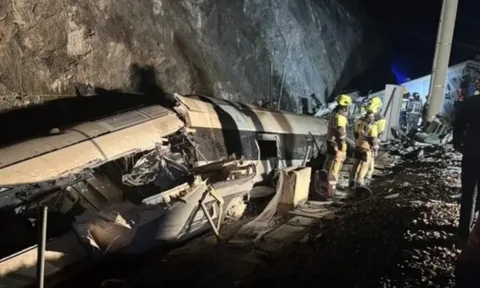
Train accidents are among the most catastrophic transportation events on American roads and railways. Whether it is a passenger train derailment, a collision at a railroad crossing, or an Amtrak crash, the injuries are almost always severe — and the legal framework that governs these cases is far more complex than a standard car accident claim.
If you or someone you love was injured in a rail crash, an experienced accident lawyer who understands the specific laws governing railroad accidents is your most important resource. This guide walks through everything a train accident victim needs to know — from what causes these crashes to who is legally responsible, and from what evidence matters to what your claim may actually be worth.
Why Train Accident Cases Require Specialized Legal Knowledge
A train accident lawyer handles a category of personal injury case that is genuinely different from standard vehicle accidents. The differences are significant and they affect strategy, evidence, liable parties, and applicable law.
Federal law plays a much larger role. Railroad operations across the United States are regulated by the Federal Railroad Administration, a division of the US Department of Transportation. The FRA sets safety standards for track maintenance, equipment, signaling systems, operating procedures, and employee qualifications. Violations of these federal standards are not just regulatory infractions — they are evidence of negligence in civil litigation.
The Federal Employers Liability Act, known as FELA, governs injury claims by railroad workers. It provides rights and remedies that are different from standard workers compensation systems, and requires an injured railroad employee to prove negligence rather than simply reporting an injury. A train accident attorney who handles railroad cases knows how to build FELA claims as well as standard passenger and bystander claims.
The National Transportation Safety Board investigates serious rail accidents, and their investigation reports — which can run thousands of pages — are crucial evidence in civil litigation. Knowing how to use NTSB findings in a personal injury case requires specific experience that most general personal injury attorneys do not have.
The Scope of Train Accidents in the United States
The scale of rail accidents in this country is larger than most people realize. According to Federal Railroad Administration data, there were over 10,000 train accidents and incidents in the United States in 2023. Rail crossing collisions alone — where a vehicle or pedestrian is struck by a train at a grade crossing — account for a significant portion of annual fatalities.
Crashes between trains and motor vehicles are statistically 20 times more likely to result in a fatality than crashes between two motor vehicles. The size and speed differential between trains and other objects means that even relatively low-speed collisions cause catastrophic results.
Amtrak, America’s national passenger rail service, serves hundreds of stations across 46 states. Amtrak accidents have been the subject of major NTSB investigations and large civil recoveries for injured passengers. An amtrak train accident lawyer who has handled Amtrak claims specifically understands the administrative processes and federal regulations that apply to these cases.
Common Types of Train Accidents
A train accident law firm that handles rail cases regularly sees several recurring accident types, each with different liable parties and legal theories.
Railroad crossing collisions are the most common type of train accident involving civilians. These occur when a vehicle or pedestrian is struck by a train at a grade crossing. Liability may fall on the railroad company if signals were malfunctioning or improperly maintained, on a municipality or state agency responsible for maintaining the crossing or signage, or on a vehicle driver whose negligence placed them in the path of the train.
Train derailments occur when one or more railcars leave the track. Causes include track defects, equipment failure, excessive speed, improperly loaded cargo, and human error. Derailments can injure passengers on the train, occupants of vehicles struck by derailed cars, and bystanders in adjacent areas.
Amtrak and passenger rail crashes involve unique considerations because Amtrak operates under federal charter and specific statutory provisions govern liability and the claims process. An amtrak accident lawyer navigates the federal regulatory environment alongside standard negligence law.
Train and pedestrian accidents occur most commonly at grade crossings and along tracks where pedestrians are present. These cases frequently involve questions about trespasser liability, visible warning systems, and train operator conduct.
Subway and light rail accidents in urban transit systems fall under different regulatory frameworks than freight and intercity rail. A train & light rail accident lawyer handles claims against transit authorities, which may involve government liability rules and shorter filing deadlines.
Train worker injuries under FELA involve railroad employees who are hurt on the job. The FELA framework requires proving employer negligence rather than simply showing an injury occurred, which makes having a trains accident lawyer with FELA experience critical.
Who Is Legally Responsible After a Train Accident
One of the most important things an experienced train accident attorney does is identify every potentially liable party. Train accidents frequently involve multiple defendants with overlapping responsibilities.
The railroad company is the primary defendant in most cases. Railroad operators have a duty to maintain their tracks, equipment, and signaling systems in safe working condition; to hire and train qualified operators; and to comply with all applicable FRA regulations. Violations of these duties — whether through deferred track maintenance, equipment defects, or inadequate operator training — can establish liability.
The train operator may bear personal liability if negligent conduct — excessive speed, running signals, or distraction — contributed to the crash. In most cases, employer liability follows operator negligence under respondeat superior principles.
A government entity may be liable when a publicly operated transit system is involved or when a government agency responsible for maintaining crossing signals or road approaches failed to do so. Claims against government entities often have significantly shorter filing deadlines — sometimes as little as 60 to 180 days — and specific procedural requirements.
Vehicle manufacturers may face product liability claims if a defective vehicle component caused a crossing accident.
Cargo companies may bear responsibility if improperly loaded freight caused a derailment or contributed to the severity of a crash.
A train wreck lawyer who regularly handles these cases investigates all potential defendants from the beginning of the case rather than focusing on one party and missing others.
Key Federal Laws Governing Train Accident Claims
The Federal Employers Liability Act (FELA) applies to railroad workers injured on the job. Unlike standard workers compensation, FELA requires the injured worker to prove employer negligence. However, FELA allows full compensatory damages — including pain and suffering — that workers compensation does not provide. An experienced railroad accident attorney handles FELA claims very differently from standard personal injury claims.
The Federal Railroad Safety Act gives the FRA authority to set safety standards across the railroad industry. Violation of FRA safety regulations creates a strong basis for negligence arguments in civil litigation.
The Amtrak Reform and Accountability Act affects the legal framework for claims against Amtrak specifically, including procedural requirements and liability caps in certain circumstances.
State personal injury law governs most claims by passengers, bystanders, and vehicle occupants injured in rail accidents. State comparative negligence rules, statutes of limitations, and damages frameworks all apply alongside the federal regulatory background.
What Evidence Matters in a Train Accident Case
Train accidents generate a large amount of highly relevant evidence, much of which must be preserved immediately before it disappears or is destroyed. A train crash lawyer sends preservation requests to all relevant parties the moment they are retained.
Event data recorders — the train equivalent of an aircraft black box — record speed, braking data, throttle position, and other operational information in the period before a crash. This data is often the most powerful evidence in a train accident case and must be requested and preserved immediately.
Maintenance and inspection records reveal whether the track, equipment, or signaling systems had known defects that were not addressed. FRA inspection records may show prior violations on the same stretch of track or with the same equipment involved in the crash.
Operator qualification and training records establish whether the operator was properly licensed, trained, and compliant with hours of service requirements at the time of the crash.
Communications records including radio traffic, dispatch logs, and electronic messaging around the time of the crash can establish what the operator knew and when.
NTSB investigation findings provide an independent technical analysis of the crash that can significantly strengthen a civil case.
Physical evidence from the scene including track condition, signal status, sight lines, and crossing conditions must be documented and preserved before the railroad company makes repairs.
Witness statements from passengers, bystanders, and other observers provide human accounts of what happened before, during, and after the crash.
A railroad accident lawyers team with experience in train cases knows which evidence exists, how to request it, and how to preserve it through legal process before the railroad’s own legal team controls access.
Common Injuries in Train Accidents
Because of the mass and speed involved in train accidents, injuries are typically more severe than in most other transportation accidents.
Traumatic brain injuries are common in derailments and collision impacts where passengers or bystanders are thrown or struck by debris. TBI can cause permanent cognitive, behavioral, and physical impairments.
Spinal cord injuries including fractures, herniated discs, and in severe cases complete or partial paralysis are frequently seen in major rail accidents.
Crush injuries and amputations occur in the most severe crossing accidents and derailments where vehicles or structures are compressed by train cars.
Burns and smoke inhalation result from fires following fuel spills or electrical failures. Rail accidents involving tanker cars or fuel-carrying locomotives create significant fire and chemical exposure risks.
Broken bones and internal injuries are common across all categories of train accident victims.
Wrongful death is unfortunately frequent in train accidents, particularly in crossing collisions and high-speed derailments. Surviving family members may pursue wrongful death claims for economic support, companionship, and funeral costs.
Train Accident Claims by City — What Local Victims Need to Know
Train accident law involves both federal frameworks and state-specific rules. Victims in major rail hubs need to understand how local legal environments affect their claims.
A new york train accident lawyer or train accident lawyer nyc handles claims in one of the country’s most complex transit environments — involving the MTA subway system, Metro-North, LIRR, NJ Transit, and Amtrak, each with different legal frameworks and government liability rules.
A new jersey train accident lawyer navigates the specific NJ Transit claims process and New Jersey’s comparative fault rules, which allow recovery as long as the plaintiff is not more than 50% at fault.
A los angeles train accident lawyer or train accident lawyer los angeles handles claims involving Metrolink, Metro Rail, and Amtrak in one of the country’s busiest rail markets. California’s pure comparative fault system allows recovery even when the victim bears partial responsibility.
An atlanta train accident lawyer handles claims against MARTA and Norfolk Southern, with Georgia’s comparative fault rules and specific government liability provisions applying.
A chicago train accident lawyer deals with Metra, CTA, and Amtrak claims, each with their own administrative claim procedures and insurance structures.
A houston train accident lawyer handles claims in a market with significant freight rail traffic and light rail operations from METRO, where track crossing accidents are a recurring issue.
A philadelphia train accident lawyer navigates SEPTA, PATCO, and Amtrak claims under Pennsylvania law, which includes specific notice requirements for government entity claims.
A california train accident lawyer handles the largest rail market in the country, including Caltrain, BART, Metrolink, Metro Rail, and Amtrak, under California’s victim-friendly pure comparative fault rules.
Statute of Limitations for Train Accident Claims
Missing the filing deadline permanently eliminates your right to pursue compensation, regardless of how strong your case is.
| Claim Type | Deadline |
| Standard personal injury (most states) | 2-3 years |
| FELA railroad worker claims | 3 years |
| Claims against Amtrak | 2 years (federal) |
| Claims against state/local transit authorities | 1-3 years + notice requirement |
| Government entity claims (notice requirement) | 60-180 days (varies by state) |
| Wrongful death | 2 years (most states) |
Government entity and transit authority claims in particular require strict attention to short notice deadlines. A train accident lawyer near me or train accident attorney near me in your area can confirm exactly what deadlines apply to your situation. Do not wait — evidence disappears quickly in train accident cases, and building a strong claim takes time.
What Compensation Is Available After a Train Accident
Economic damages cover documented financial losses. They include emergency medical treatment and hospitalization, ongoing medical care including surgery, physical therapy, and specialist visits, prescription medications and equipment, lost wages and loss of future earning capacity, property damage, and other out-of-pocket accident-related expenses.
Non-economic damages cover the human impact beyond the financial. They include pain and suffering, emotional distress and PTSD, loss of enjoyment of life, disfigurement, and loss of consortium for spouses of seriously injured victims.
Punitive damages may be available in cases where the railroad’s conduct was especially reckless — operating with known track defects, falsifying maintenance records, or other conduct showing conscious disregard for passenger safety.
Settlement and verdict values in train accident cases vary widely based on injury severity, clarity of liability, and the depth of the responsible parties’ insurance coverage. Serious injury cases involving major railroads have resulted in recoveries ranging from hundreds of thousands to millions of dollars. Cases involving wrongful death or catastrophic injury have produced multi-million dollar outcomes.
Frequently Asked Questions
Can I sue Amtrak if I was injured as a passenger?
Yes. Amtrak has a duty of care to its passengers and can be held liable for negligence that causes injuries. An amtrak train accident lawyer handles the specific procedural requirements that apply to Amtrak claims, including federal notice requirements. The federal government charter of Amtrak adds complexity that makes specialized legal help particularly important.
What if a railroad crossing signal was not working?
A malfunctioning signal at a grade crossing can create liability for the railroad company responsible for maintaining the crossing equipment, and in some cases for a government entity responsible for the road approaches. A railroad accident attorney will investigate signal maintenance records, prior reports of malfunction, and the history of the specific crossing to establish whether the signal failure constituted negligence.
How is a train accident case different from a car accident case?
Train accident cases involve federal regulatory law, specific statutes like FELA, potential government defendants, very short notice deadlines for government claims, specialized evidence like event data recorders and FRA inspection records, and frequently involve multiple defendants with overlapping liability. A train accident lawyers team with specific railroad experience brings knowledge that most general personal injury attorneys do not have.
What if I was a bystander injured near a train accident?
Bystanders injured in train accidents — by debris, by derailed cars, by chemical spills, or by other secondary effects — have the same right to pursue compensation as passengers. The liable parties may include the railroad company, cargo owners, or government entities depending on the cause of the crash.
What is the Federal Employers Liability Act and does it apply to my case?
FELA applies to railroad workers injured in the course of their employment. It requires proof of employer negligence rather than the no-fault standard of standard workers compensation, but it allows full recovery of all damages including pain and suffering. If you are a railroad employee who was injured on the job, a railroad accident lawyers team familiar with FELA is essential.
What if the train accident was caused by a track defect?
Track defects are a leading cause of derailments. The FRA sets detailed standards for track condition, and railroad companies are required to conduct regular inspections and repairs. If a track defect caused your accident, maintenance records, inspection logs, and prior FRA violation history all become critical evidence. A train accident law firm will request all of these records immediately upon being retained.
How long does a train accident case take to resolve?
Train accident cases involving major railroads or government entities typically take longer to resolve than standard car accident claims. Simple cases may resolve in one to two years. Complex cases involving multiple defendants, serious injuries, or disputed liability can take three or more years. Your attorney will provide a realistic timeline based on the specific facts of your case.
Does a train accident lawyer work on contingency?
Most train accident lawyers and train accident attorneys handle these cases on contingency — no upfront fees and no payment unless the case results in compensation. The fee is a pre-agreed percentage of the recovery, typically 33% to 40% depending on complexity. There is no financial risk in obtaining a free consultation.
How do I find a train accident lawyer near me?
When searching for a train accident lawyer near me or train accident attorney near me, look specifically for attorneys who list railroad or train accident cases among their regular practice areas. General personal injury experience is not sufficient for these cases. The federal regulatory framework, FELA, NTSB evidence, and government defendant considerations require specific knowledge that only comes from handling these cases regularly.
Checklist for Train Accident Victims
- Get medical attention immediately — document all symptoms including those that seem minor
- Request and preserve a copy of any incident or accident report filed
- Photograph the scene, vehicles, signals, and visible injuries before anything is changed
- Collect witness names and contact information
- Keep all medical records, bills, and treatment documentation from day one
- Note any statements made by railroad employees at the scene
- Do not give recorded statements to railroad representatives or insurance companies
- Do not sign any release or settlement agreement without legal review
- Contact a train accident lawyer as soon as possible — evidence and deadlines are time-sensitive
Conclusion
Train accidents put victims up against some of the most well-resourced defendants in personal injury law — major railroad corporations with experienced legal teams and significant financial resources. The legal framework governing these cases is more complex than any standard vehicle accident, involving federal regulations, specialized statutes, multiple potential defendants, and evidence that must be preserved immediately.
A train accident lawyer who handles these cases regularly understands the full picture — from FRA regulations and NTSB findings to FELA claims and government entity notice requirements. Whether you are looking for a train accident lawyer nyc after a subway or commuter rail crash, a california train accident lawyer after a Caltrain or Metrolink incident, or a trains accident lawyer anywhere in the country, getting experienced legal help early in the process makes a significant difference in what you recover.
Most train accident lawyers offer free consultations and work entirely on contingency. There is no cost to find out where you stand.
Nothing in this article constitutes legal advice. Laws vary significantly by state and by the type of railroad involved. Please consult a licensed personal injury attorney for guidance specific to your situation.