
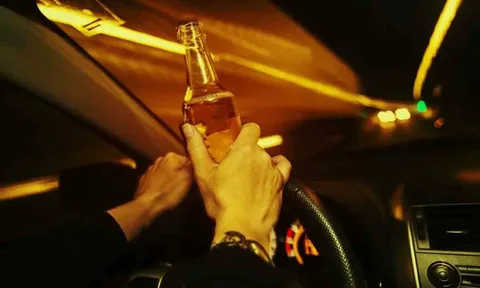
Drunk driving accidents are different from other car crashes in one fundamental way: they were entirely preventable. When a driver chooses to get behind the wheel after drinking, they are not making a mistake — they are making a choice that puts every person on the road at risk. When that choice injures or kills someone, the law provides victims with more remedies than a standard car accident claim.
If you or someone you love was hurt by a drunk driver, understanding your rights as an accident lawyer would explain them to you is the starting point for pursuing the compensation you deserve. This guide covers everything a DUI accident victim needs to know — from how civil and criminal cases work simultaneously to what punitive damages are and why dram shop liability may apply to your case.
The Scale of Drunk Driving in the United States
Drunk driving remains one of the most persistent and deadly problems on American roads. According to the National Highway Traffic Safety Administration, drunk driving crashes killed 13,524 people in the United States in 2022 — the highest number in sixteen years. That represents one person killed every 39 minutes in a drunk driving crash.
In 2023, NHTSA reported that approximately 37% of all traffic fatalities involved alcohol-impaired driving. Drivers with a blood alcohol content of .08 or higher — the legal limit in every US state — were involved in these fatalities, but research shows that impairment begins well below the legal limit.
These statistics establish something critical for anyone working with a dui accident lawyer: drunk driving is not an accident in any morally meaningful sense. It is a form of negligence so severe that courts across the country treat it differently from ordinary carelessness — often allowing victims to recover punitive damages specifically designed to punish the driver beyond compensating the victim.
DUI vs. DWI — What Is the Difference and Why Does It Matter
Many victims arrive at their first consultation with a dui accident attorney confused about whether the at-fault driver was charged with a DUI or DWI. Understanding the difference helps clarify what evidence is available and how the criminal case may affect the civil claim.
DUI stands for Driving Under the Influence. It refers to operating a vehicle while impaired by alcohol, prescription drugs, illegal substances, or any combination thereof. Most states use DUI as their primary classification.
DWI stands for Driving While Intoxicated or Driving While Impaired. Some states use DWI instead of DUI. Others use both charges with different meanings — for example, some states treat DWI as a lesser charge for drivers slightly above the legal limit, while DUI is reserved for higher BAC levels or drug impairment.
In practical terms for a civil injury claim, the distinction is less important than the underlying conduct. Whether the driver was charged with DUI or DWI, what matters is that they were operating a vehicle while impaired. Both charges create strong grounds for civil liability.
A dwi accident attorney handles cases under the same legal framework as DUI cases — the label the criminal system uses does not determine what civil remedies are available.
How DUI Accident Cases Work — Civil vs. Criminal Claims
One of the most important things a dui accident lawyer explains to new clients is that a drunk driving crash creates two separate legal proceedings that run simultaneously and independently.
The criminal case is brought by the state against the drunk driver. The prosecutor represents the government, not the victim. The goal is punishment — fines, license suspension, probation, or jail time. The standard of proof is beyond a reasonable doubt, which is a very high bar.
The civil case is brought by the victim against the drunk driver. The victim’s attorney represents the victim. The goal is compensation — money for medical bills, lost income, pain and suffering, and potentially punitive damages. The standard of proof is preponderance of the evidence, which means more likely true than not — a significantly lower bar than the criminal standard.
This separation means two important things for victims. First, you do not have to wait for the criminal case to conclude before pursuing civil compensation. Second, even if the drunk driver is acquitted of the criminal charges, you can still win your civil case. A DUI acquittal does not prevent civil recovery because the standards of proof are completely different.
Working with an experienced dui accident attorney during the criminal proceedings protects your civil case by ensuring that evidence gathered during the criminal investigation — BAC results, field sobriety test records, police reports, dashcam footage, arrest records — is preserved and made available for civil litigation.
Who Is Legally Responsible After a DUI Accident
A drunk driving accident attorney investigates liability more broadly than most car accident cases because drunk driving crashes often involve multiple potentially responsible parties.
The drunk driver bears primary responsibility. They made the choice to drink and drive, breached the duty of care they owed to every person on the road, and caused the crash. Negligence per se — where violating a statute establishes negligence as a matter of law — often applies in DUI cases because drunk driving violates criminal traffic laws.
The vehicle owner may bear liability if they allowed someone they knew or should have known was intoxicated to drive their vehicle. This theory, called negligent entrustment, applies when the vehicle owner had reason to know the driver was not safe to operate the vehicle.
Commercial establishments — bars, restaurants, and nightclubs — may bear liability under dram shop laws if they served alcohol to a visibly intoxicated person who then drove and caused an accident. These laws vary significantly by state and can open up substantial additional liability beyond what the drunk driver’s own insurance covers.
Social hosts — people who serve alcohol at private parties — may face liability in states with social host liability laws when a guest they served while visibly intoxicated later causes a drunk driving crash.
A drunk driving accident law firm that regularly handles these cases evaluates every potential defendant from the beginning, not just the driver. This matters enormously when the drunk driver has limited insurance coverage or significant assets — which is frequently the case.
Dram Shop Liability — A Major Source of Additional Recovery
Dram shop laws exist in most US states and allow DUI accident victims to pursue claims against the establishment that served alcohol to the driver before the crash. These claims can significantly increase the total compensation available, particularly when the drunk driver’s own insurance is insufficient to cover the victim’s losses.
To establish dram shop liability, a dui accident lawyer typically needs to show that the establishment served alcohol to a person who was visibly intoxicated at the time of service, or in some states, to a minor. Evidence used to establish dram shop liability includes surveillance footage from the establishment, credit card and bar tab records showing the volume consumed, witness accounts from other patrons, and server and management testimony.
Dram shop liability varies significantly by state. Some states like Texas have clear statutory dram shop laws that create direct liability for establishments. Others require proof that the server knew the patron would be driving. A few states have limited or no dram shop liability.
The practical implication is significant. A drunk driver who caused serious injuries may have $100,000 or even $300,000 in liability coverage — not nearly enough to compensate a victim facing millions in lifetime medical costs after a catastrophic injury. When a bar or restaurant with substantial commercial insurance coverage is also liable, the total available compensation increases dramatically.
Punitive Damages — Why DUI Cases Are Different
Standard car accident cases do not typically involve punitive damages. DUI accident cases frequently do, and this is one of the most important distinctions that separates these cases from ordinary negligence claims.
Compensatory damages — the standard damages in personal injury cases — are designed to compensate the victim for their actual losses. They include medical bills, lost wages, pain and suffering, and other documented consequences of the crash.
Punitive damages — also called exemplary damages in some states — are designed to punish the defendant and deter others from engaging in the same conduct. They are available when the defendant’s behavior was especially reckless, malicious, or shows a conscious disregard for the safety of others. Drunk driving typically meets this standard because the driver knowingly chose to drive in an impaired state.
The availability and limits of punitive damages vary by state:
| State | Punitive Damages Cap | Notes |
| California | No cap | Punitive damages must be proportional |
| Texas | Capped at $200,000 or 2x economic + non-economic | Drunk driving often supports higher awards |
| Florida | Generally capped at 3x compensatory or $500,000 | Higher cap for intentional misconduct |
| Georgia | No specific cap | Courts have discretion |
| New York | No cap | Must show conscious disregard for others |
| Illinois | No cap | Must show actual malice |
A dui accident attorney experienced in these cases evaluates whether punitive damages are appropriate and builds the evidence needed to support them — including the driver’s BAC level, prior DUI history, and any other evidence of reckless conduct.
What Evidence Matters in a DUI Accident Case
The strength of a civil DUI case depends heavily on the quality and completeness of the evidence preserved and gathered. A dui accident law firm begins this process immediately after being retained.
The police report and DUI arrest records document the crash, the driver’s behavior at the scene, and the results of field sobriety tests and breathalyzer or blood tests. The arrest record and any criminal charges filed provide corroborating evidence of impairment.
BAC test results — whether from a breathalyzer or blood draw — establish the level of alcohol in the driver’s system at the time of the crash. A BAC at or above the legal limit is powerful evidence, and even below-limit results can support a civil claim if other evidence of impairment exists.
Dashcam and surveillance footage may capture the driver’s behavior before, during, and after the crash. Footage from the establishment that served the driver may show their condition at the time of service.
Witness statements from other drivers, passengers, pedestrians, and bystanders who observed the driver’s behavior are valuable corroboration for both the crash itself and the driver’s impaired condition.
Bar and restaurant records including credit card receipts, bar tabs, and surveillance footage establish what the driver consumed, how much, and over what period before the crash — essential for dram shop claims.
The driver’s criminal case records — including field sobriety test videos, arrest reports, and any statements made to police — become available to civil attorneys through discovery and can significantly strengthen the civil case.
Common Injuries in DUI Accidents
DUI crashes tend to be more severe than average car accidents because impaired drivers often have reduced reaction times, impaired judgment, and frequently drive at higher speeds or engage in more dangerous behavior than they would sober. Victims of these crashes frequently suffer:
Traumatic brain injuries ranging from concussions to severe brain damage. TBI from high-impact drunk driving crashes can cause permanent cognitive, behavioral, and physical impairments.
Spinal cord injuries including herniated discs, fractures, and in the most severe cases, partial or complete paralysis. Spinal injuries often require surgery and lifelong medical management.
Broken bones throughout the body — including arms, legs, ribs, and facial fractures — are common in drunk driving crashes, particularly when the impaired driver fails to brake before impact.
Internal injuries and organ damage from blunt force trauma may not produce obvious symptoms immediately. Emergency evaluation is essential after any serious crash.
Soft tissue injuries and whiplash — while often considered minor — can produce chronic pain and restricted movement when severe.
Wrongful death is the most devastating outcome of drunk driving crashes. When a victim is killed, surviving family members may have the right to pursue a wrongful death claim that covers funeral costs, loss of financial support, and loss of companionship.
What Compensation Is Available After a DUI Accident
A dui accident lawyer pursues two primary categories of damages in these cases, with a third category — punitive damages — available in appropriate situations.
Economic damages cover documented financial losses. They include emergency medical treatment and hospitalization, ongoing medical care including surgery, physical therapy, and specialist visits, prescription medications and equipment, lost wages and loss of future earning capacity, vehicle repair or replacement, and other accident-related out-of-pocket costs.
Non-economic damages cover the human impact beyond the financial. They include pain and suffering, emotional distress and PTSD, loss of enjoyment of life, disfigurement, and loss of consortium for spouses of seriously injured victims.
Punitive damages apply in drunk driving cases where the driver’s BAC was significantly above the limit, where prior DUI history exists, or where other evidence supports a finding of especially reckless conduct.
Settlement ranges in DUI accident cases vary widely. Minor injury cases may settle for $25,000 to $100,000. Cases involving serious injuries, surgery, or permanent disability regularly reach six figures and above. Cases involving catastrophic injuries, wrongful death, or significant punitive damage awards have resulted in multi-million dollar outcomes.
Victims represented by a dui accident attorney consistently recover more than those who negotiate without legal representation, particularly in cases where punitive damages or dram shop claims are available.
What to Do After a DUI Accident
The steps taken in the hours and days following a drunk driving crash have a direct impact on the strength of your civil claim.
Call 911 immediately. Reporting the crash ensures a police response and the creation of an official report. Officers will conduct a DUI investigation at the scene — including field sobriety tests and breathalyzer testing — that becomes evidence in both the criminal and civil cases.
Get medical attention the same day. Even if you feel okay, serious injuries from high-impact crashes are not always immediately obvious. Same-day medical documentation creates an unbroken evidentiary connection between the crash and your injuries.
Document everything you can. Photographs of all vehicles, road conditions, damage, and visible injuries. Names and contact information for witnesses. The other driver’s name, license number, insurance information, and any information about where they were before the crash.
Do not give a recorded statement to the drunk driver’s insurance company. You are not legally required to do so. Insurance companies use these statements to minimize claims. Contact a dui accident lawyer before speaking with any insurer.
Do not accept any early settlement offer. Early offers come before the full extent of your injuries is known and almost always undervalue the claim. They also typically do not include punitive damages that may be available.
Preserve your own records. Keep all medical bills, treatment records, and documentation of how the injuries affect your daily life and work. This foundation supports the full calculation of your damages.
DUI Accident Statute of Limitations by State
Every state sets a deadline for filing a personal injury lawsuit. Missing this deadline permanently eliminates the right to seek compensation through the courts.
| State | Deadline for Personal Injury |
| California | 2 years |
| Texas | 2 years |
| Florida | 2 years |
| Georgia | 2 years |
| New York | 3 years |
| Illinois | 2 years |
| Pennsylvania | 2 years |
| Colorado | 3 years |
| Virginia | 2 years |
| Mississippi | 3 years |
Wrongful death claims often have different deadlines than personal injury claims, and claims against government entities may have significantly shorter windows. A dui crash lawyer in your state can confirm the exact deadline that applies to your specific situation.
Do not wait. Evidence preservation, case investigation, and building the strongest possible civil case all take time.
Frequently Asked Questions
Can I sue if the drunk driver had no insurance?
Yes. Options include your own uninsured motorist coverage, which applies when the at-fault driver has no insurance. Additionally, a dui accident attorney will investigate whether other parties — the vehicle owner, a bar or restaurant, a social host — may be liable and have insurance coverage.
What are dram shop laws and do they apply to my case?
Dram shop laws hold alcohol-serving establishments liable when they serve alcohol to visibly intoxicated individuals who then cause crashes. If the drunk driver consumed alcohol at a bar, restaurant, or club before the crash, a drunk driving accident law firm will investigate whether that establishment bears dram shop liability. These claims can significantly increase available compensation.
Can I still win my civil case if the drunk driver is found not guilty?
Yes. Criminal acquittal does not bar civil recovery. The criminal standard — beyond a reasonable doubt — is much higher than the civil standard of preponderance of evidence. Many cases that result in criminal acquittal still produce successful civil judgments for the victim.
What is the legal BAC limit and does it matter in my civil case?
In every US state, a BAC of .08 or higher is per se illegal for standard drivers. For commercial drivers, the limit is .04. In your civil case, a BAC at or above the legal limit strongly supports a negligence per se argument — meaning the violation of the statute establishes negligence as a matter of law. Even below-limit BAC can support civil liability if other evidence of impairment exists.
What are punitive damages and can I get them in a DUI case?
Punitive damages are awarded to punish especially reckless conduct and deter others from similar behavior. In drunk driving cases, courts regularly award punitive damages because choosing to drive while impaired shows conscious disregard for the safety of others. A dui accident injury lawyer will evaluate whether punitive damages apply based on the driver's BAC, prior DUI history, and other facts.
How long do I have to file a DUI accident lawsuit?
Most states give accident victims two to three years from the date of the crash to file a personal injury lawsuit. Some states have shorter windows for claims involving government entities or minors have different rules. Contact a dui accident lawyer near me as soon as possible to confirm the deadline in your state.
What if I was a passenger in the drunk driver’s vehicle?
Passengers injured in a drunk driver's own vehicle are generally entitled to the same civil remedies as any other accident victim. In some states, assumption of risk arguments may arise — particularly if the passenger knew the driver was intoxicated before getting into the vehicle — but these defenses are often limited. A dwi injury lawyers team can evaluate how passenger status affects your specific claim.
How does a DUI accident affect the driver’s insurance?
A DUI conviction typically causes the at-fault driver's insurance rates to increase substantially. In some cases, their policy is canceled. This does not affect your right to compensation — the insurance company that insured the driver at the time of the crash is still responsible for claims up to the policy limits. Beyond the policy limits, the driver is personally responsible, and additional defendants like establishments may provide additional coverage.
What does a hit by drunk driver lawyer cost?
Most dui accident lawyers work on contingency — no upfront fees and no payment unless the case results in compensation. The attorney's fee is a pre-agreed percentage of the recovery, typically 33% to 40% depending on case complexity. There is no financial risk in obtaining a free consultation to understand your options.
Action Checklist for DUI Accident Victims
If you were recently injured by a drunk driver, here is what to prioritize:
- Get medical attention immediately — same day if possible
- Request a copy of the police report and confirm a DUI investigation occurred
- Document all evidence — photos, witness contacts, crash scene details
- Preserve your own medical records and bills from day one
- Note information about where the drunk driver was before the crash
- Do not give recorded statements to any insurance company
- Do not sign any settlement offer or release without legal review
- Do not post about the accident or your injuries on social media
- Contact a dui accident lawyer near me for a free consultation
Conclusion
A drunk driving crash is not just a car accident. It is the consequence of a deliberate choice that the law treats with appropriate severity — through criminal prosecution, enhanced civil liability, and in many cases, punitive damages designed to punish conduct that put every person on the road at risk.
A dui accident lawyer who regularly handles these cases understands the full picture of available remedies — civil compensation, dram shop claims against establishments, punitive damages, and multiple potentially liable defendants. Whether you are in Denver, Atlanta, Charleston, or anywhere else in the country, your rights as a victim of a drunk driver are real and worth pursuing.
Whether you need a denver dui accident lawyer, an atlanta dui accident victim lawyer, or a charleston dui accident lawyer in your area — most work on contingency, offer free consultations, and are ready to evaluate your case without any upfront commitment.
A dui victim lawyer can help you understand what your case is worth. A hit by drunk driver lawyer can make sure the full liability picture is investigated. The first conversation costs you nothing.
Nothing in this article constitutes legal advice. Laws vary significantly by state. For guidance specific to your situation, please consult a licensed personal injury attorney in your area.